02Overview
Interfaces people finish, not abandon.
Who it's for
- Startups in Bhutan with an app idea and no screens yet
- Businesses whose app or web flow loses people at checkout, sign-up or booking
- Teams with developers in hand who need a design they can build from
Most apps in Bhutan are not abandoned because they are ugly. They are abandoned because the third screen asks for something the person does not have to hand, or the button they need is off the bottom of a 6-inch phone on a TashiCell connection. UI/UX design is the work of finding those moments before your developers build them in.
What this looks like
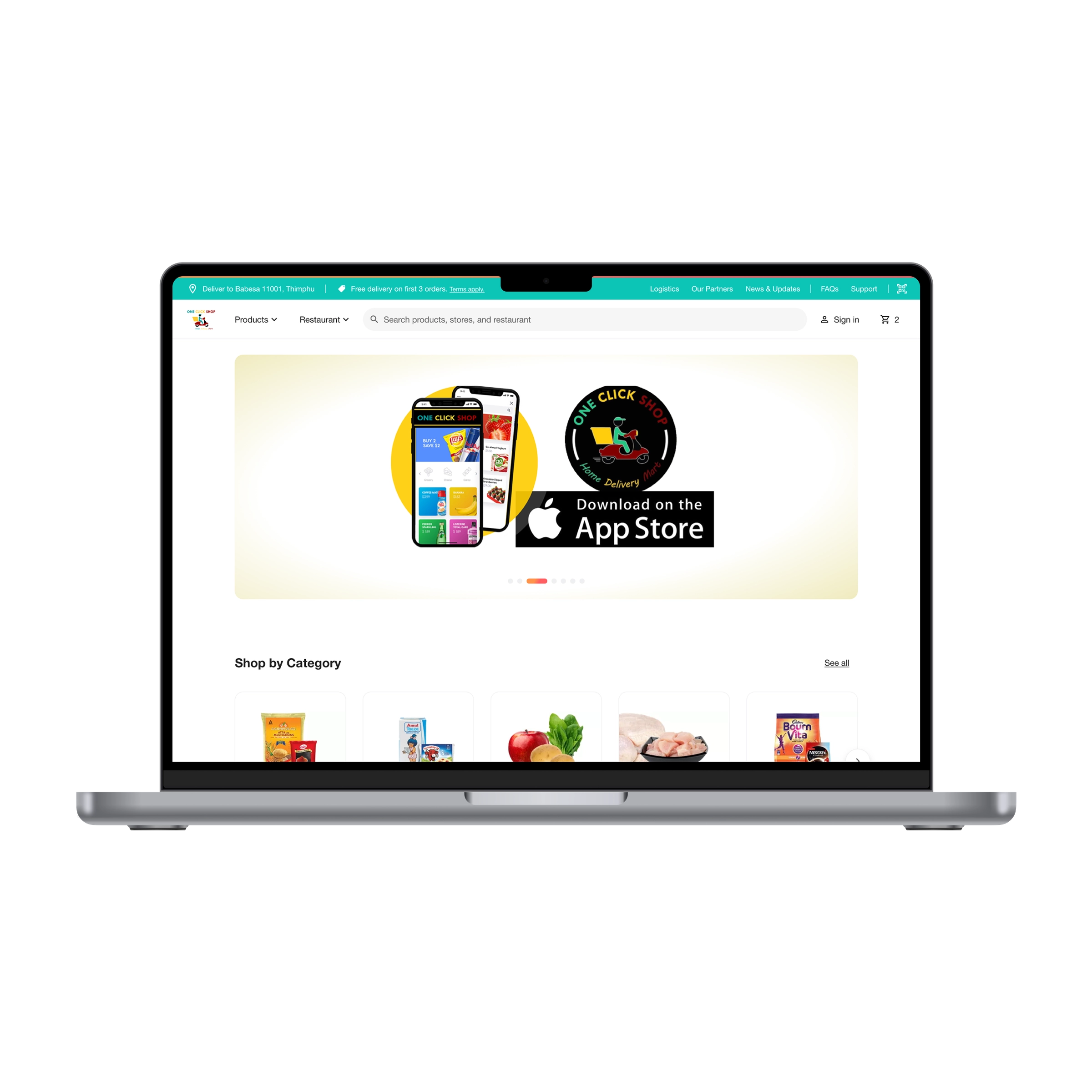
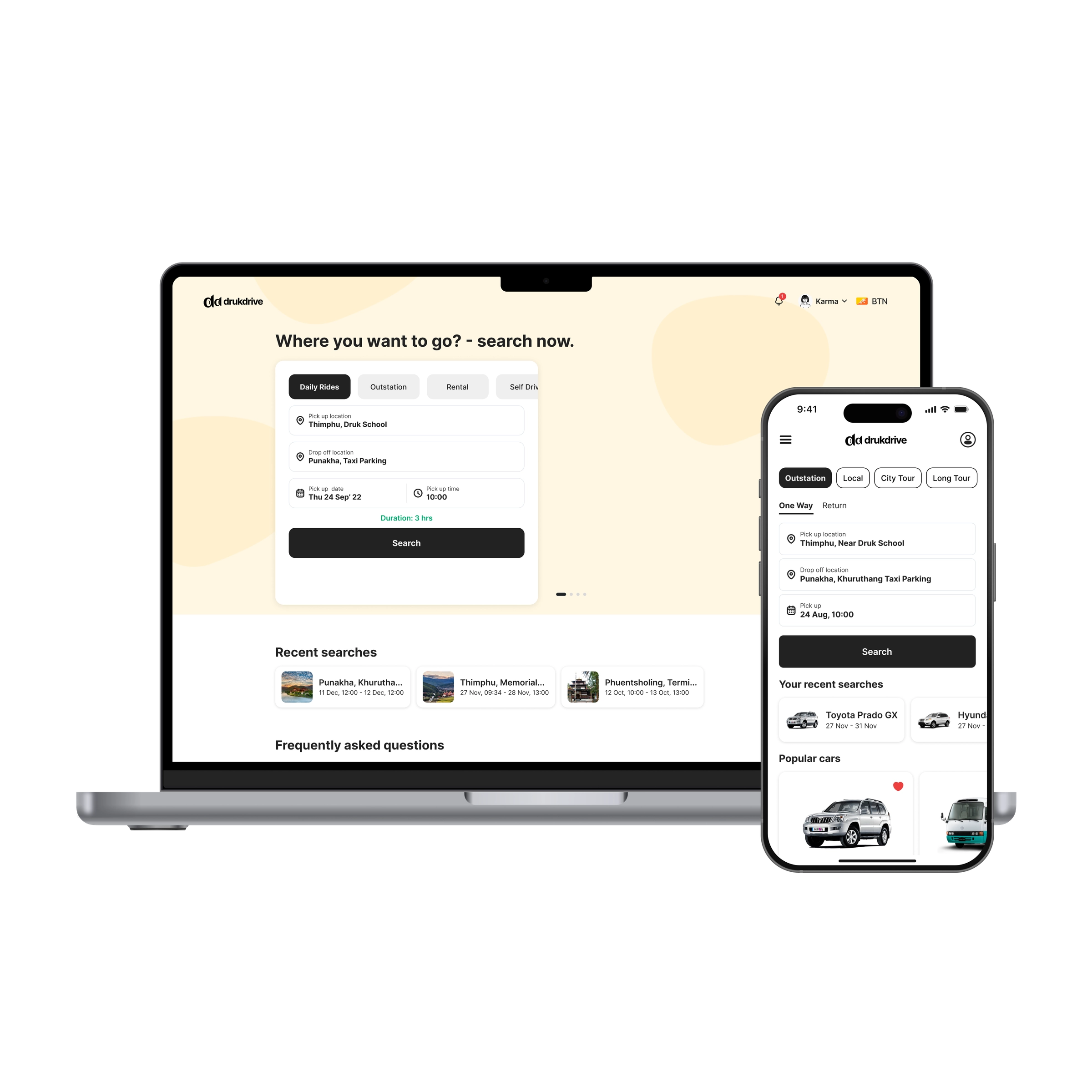
We start with the people, not the screens. Who opens this, on which phone, in what kind of hurry. For oneclickshop that meant a grocery order finished in under 2 minutes by someone standing in a kitchen. For drukdrive it meant a booking that survives a dropped connection between Thimphu and Paro.
Then wireframes, in grey, so the conversation is about order and words. Then a prototype you can tap, put in front of 5 real users. Then the final screens, with a component library your developers can read without asking us what a spacing value was.
You get Figma files, not a PDF. Every colour, size and gap is named.
How we work
2 reviews a week, on WhatsApp or at the studio in Thimphu. We show unfinished work early because it is cheaper to change a wireframe than a screen, and cheaper to change a screen than an app.
We test with Bhutanese users on their own phones, usually mid-range Android on a 4G connection. If a flow needs 3 taps in Figma and 7 in real life, we go back.
Handover is a call, not an email. We walk your developers through the file and stay reachable while they build.
What it costs
From Nu. 20,000 for a focused product — a booking flow, a checkout, an onboarding — in 2 to 4 weeks. A full app with 30 or more screens is quoted after the brief, as a fixed figure. Half to begin, half at handover, in Nu. by mBoB or bank transfer.
If you are not sure whether you need this or branding first, send a message. We will tell you honestly.
03What you get
What you walk away with.
A clickable Figma prototype, tested with 5 real users, with the findings written up
Final screens and a Figma component library with named spacing, type and colour tokens
Not included
- Front-end or app development (we can pair you with a developer, or build the web part on WordPress)
- Copywriting beyond labels, buttons and error messages
- Illustration and photography
04Process
How the work goes.
Typical timeline: 2–4 weeks. Every step is agreed in writing before it starts.
-
01
Brief and audit
A 60-minute call, on WhatsApp or at the studio. We map who uses the product, what they are trying to finish and where they give up today. 2–3 days.
-
02
Flows and wireframes
Every screen in scope, drawn in grey boxes first so we argue about the order of things, not the colours. Reviewed with you twice. 1 week.
-
03
Prototype and testing
A clickable Figma prototype put in front of 5 people who match your users, usually over tea in Thimphu or on a WhatsApp video call. We fix what they trip on. 1 week.
-
04
Final screens and handover
Polished screens, a component library and a walkthrough with your developers so nothing is lost in translation. 3–5 days.
05Pricing
What it costs.
Starting at
Nu. 20,000
≈ US$ 240
- 2–4 weeks
- Fixed quote in writing before any work starts
- Paid in Nu. by mBoB or bank transfer; US$ by card from abroad
06FAQ
Questions people ask first.
01 We already have developers. Can you just design?
Yes. Most of our design work is handed to someone else's developers. You get Figma files with named components and tokens, a short handover call, and we stay on WhatsApp for questions while they build.
02 Do you test with Bhutanese users or just go by best practice?
Both, but the tests decide. We recruit 5 people who match your users — a shopkeeper in Paro, a civil servant in Thimphu, a tour guide — and watch them use the prototype on their own phones. What trips someone in Bhutan matters more than a pattern that works in Singapore.
03 Can the interface be in Dzongkha as well as English?
Yes. We design the layouts to hold both, since Dzongkha runs longer and needs a Tibetan-script font such as Noto Serif Tibetan. You supply the translation; we set it and check it on real phones.
04 How do we pay?
In Nu., by mBoB or a BoB or BNB transfer, 50% to begin and 50% at handover. Clients outside Bhutan pay in US$ by bank transfer or card at the day's rate.